Beasts and Botany by Jess Morton
Mint Moth
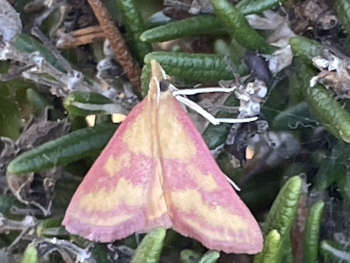
Gotcha, I thought to myself! A flake of sun-bright had flitted up out the shrub I was passing, zigzagged madly for a second or two and then disappeared into a bush a few feet ahead. But I’d followed the flight—moth, for sure. For once, I would get a good look at it if I was cautious enough. I didn’t know exactly where it was, but the moth knew exactly where I was.
When not flying, moths prefer hiding away, on the underside of a leaf, perhaps, or with wings spread and pressed tightly against a stem as if part of the plant itself. Although inert, they are intensely aware. If threatened, they are off in yet another wild, twisting dash and dive into the undergrowth. Just like this one did as I began looking for it. Off again!
I was ready though, and saw it land. This time in the open and visible. That is, if you knew how to see it. A casual glance might dismiss it as a small flower or bud. My moth (as if I owned it?) was one of the mint moths, with wings a pastel confection of rose and gold, Pyrausta laticlavia, in Lepidopteran, AKA Southern Purple Mint Moth.
Mint moth caterpillars feed internally on various parts of plants, so are rarely found. This species will use rosemary, a contributing factor in making it one of our two most common mint moths. Still, you won’t notice either unless you look for them. Until then, they will simply be sudden, brief and bright, erratic flashes of wing in the sun. Zip. Zip. Then gone.